Sintered HH vs. Organic Brake Pads: Stopping Distance, Rain Bite & Rotor Life
When should you upgrade from factory organic pads to copper-free ECE R90 sintered HH friction compounds? Complete thermal & wear breakdown.
Engineering Overview & Diagnosis
Stock organic (NAO) brake pads deliver smooth initial modulation for low-speed city commuting, but their resin binders break down quickly past 260°C during repeated highway decelerations or flooded monsoon commutes. Once the resin outgasses, lever travel lengthens and stopping distances increase noticeably.
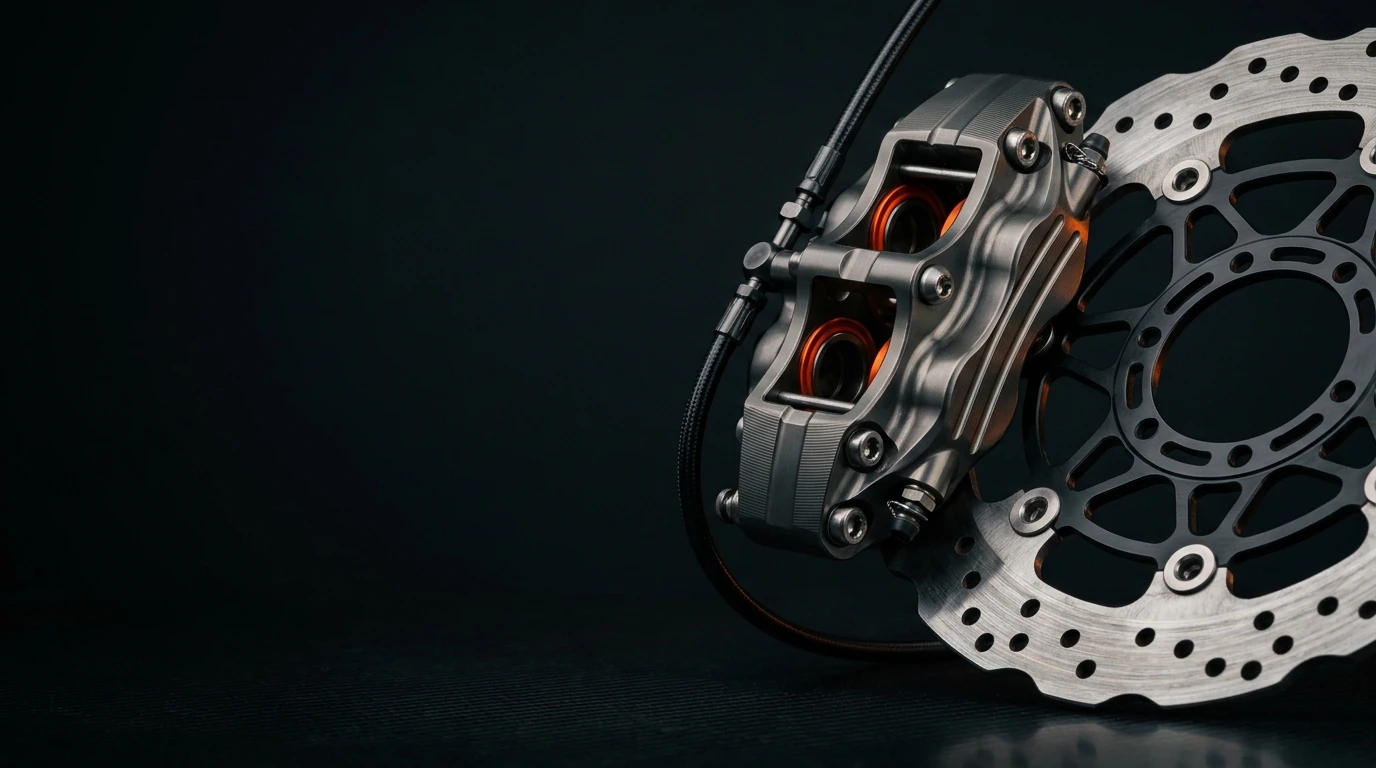
ECE R90 copper-free sintered HH pads fuse metallic particles under extreme heat and pressure, preserving a coefficient of friction above 0.55 μ from cold first-squeeze right up to 420°C heavy braking. Understanding how your stainless disc material, riding speeds, and bed-in discipline interact guarantees both fade-free stopping and long rotor life.
Step-by-Step Workshop Procedure
1. Cold & Wet Friction Coefficient (HH Rating)
An HH friction code indicates >= 0.55 mu both cold and at 300°C highway temperatures, giving consistent one-finger lever response in monsoon downpours.
2. Checking Rotor Compatibility Before Swapping
Verify your stainless rotor is stamped for sintered pads or upgrade to an AISI 420 floating wave disc to dissipate heat evenly without glazing.
3. Proper 50 km Bed-In Procedure
Avoid dragging brakes continuously on day one. Perform 15 firm, short decelerations from 60 to 15 km/h with 45 seconds of airflow cooling between stops so an even friction transfer layer forms on the disc.
Factory Fastener Torque Reference Table
Verified NmTechnician Pro Notes
- Always clean caliper pistons with brake cleaner before pushing them back—caked road grit scores rubber dust seals.
- After washing a warm sintered rotor setup, drag the brake lightly for 2 seconds to clear standing water film before entering traffic.