428 vs. 520 X-Ring Drivetrain Guide: Detecting Hooked Teeth & Chain Stretch
Putting a brand-new chain onto worn sprockets destroys X-ring seals within 2,000 km. Here is how workshops measure 20-link elongation.
Engineering Overview & Diagnosis
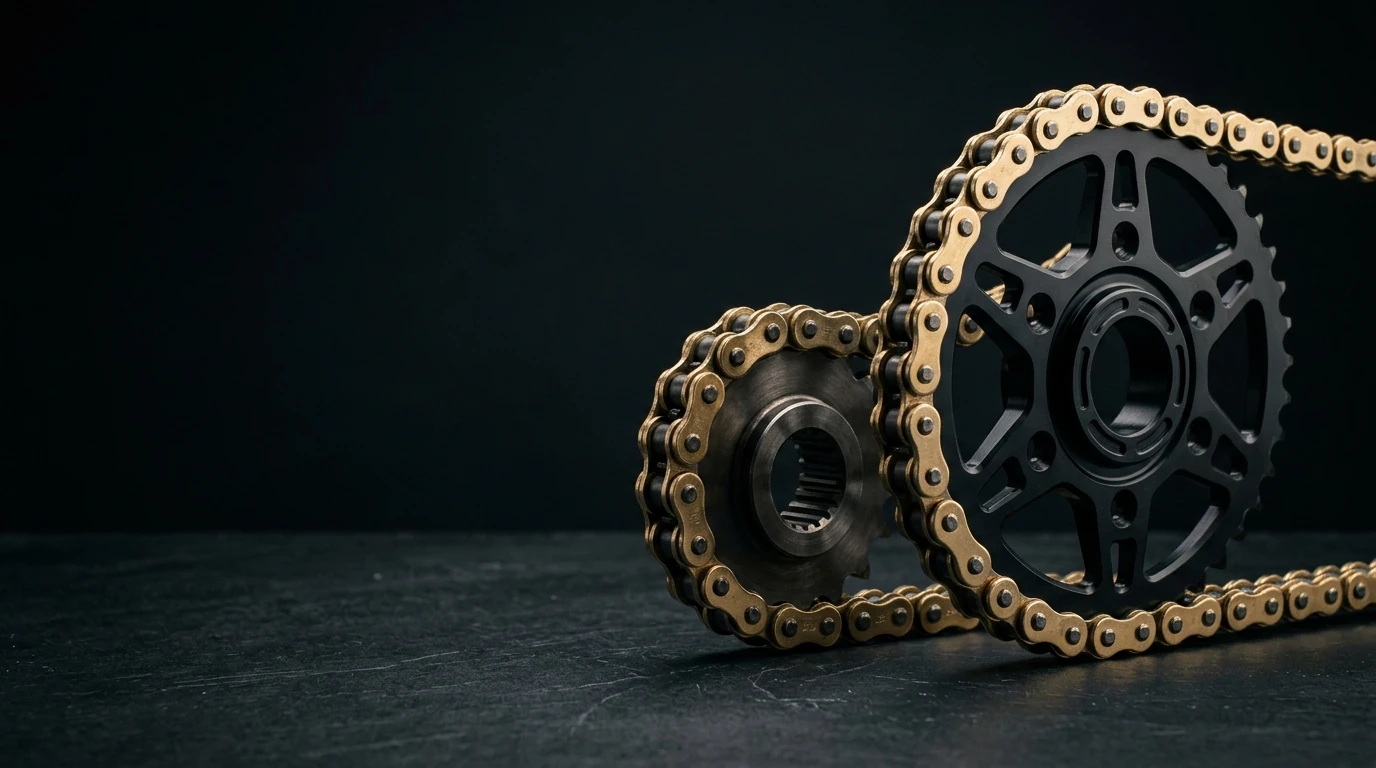
A motorcycle chain never actually stretches its solid alloy side-plates—what riders call "chain stretch" is microscopic abrasive wear inside each pin-and-bushing joint after factory grease escapes past compromised seals. Because an elongated pitch sits higher on sprocket gear valleys, every drive pulse concentrates load onto just two sprocket teeth instead of six.
Measuring 20-link pitch distance with a steel rule and inspecting tooth symmetry saves expensive gearbox countershaft bearings, eliminates surging at cruise throttle, and preserves crisp clutchless downshifts.
Step-by-Step Workshop Procedure
1. The Pull-Off Test at 3 O’Clock on the Rear Sprocket
Pull the chain directly rearward at the 3 o’clock point of the rear sprocket. If you can expose more than half a tooth height between the rollers and sprocket crown, pin-bushing elongation has exceeded service limit.
2. Why Brass X-Rings Outlast Standard O-Rings
Standard O-rings flatten under side-plate compression, creating drag and friction heat. Brass X-rings twist slightly across four thin sealing lips, retaining factory lithium complex grease nearly twice as long while freeing rear-wheel spin.
3. Checking Swingarm Laser & Hash-Mark Alignment
Verify left and right swingarm adjuster hash marks sit equally or sight down the sprocket plane with an alignment tool. Misaligned sprockets eat X-ring shoulders unevenly within 500 km.
Factory Fastener Torque Reference Table
Verified NmTechnician Pro Notes
- Never tension a chain so tight that suspension compression binds the rear shock—excessive tension snaps seals and wears countershaft seals.
- Lubricate X-ring chains while warm after a ride, applying gear oil / wax along the inner roller edges only.